
The TREEE of Leadership
By Corae Young
November 24th, 2025•328 views•
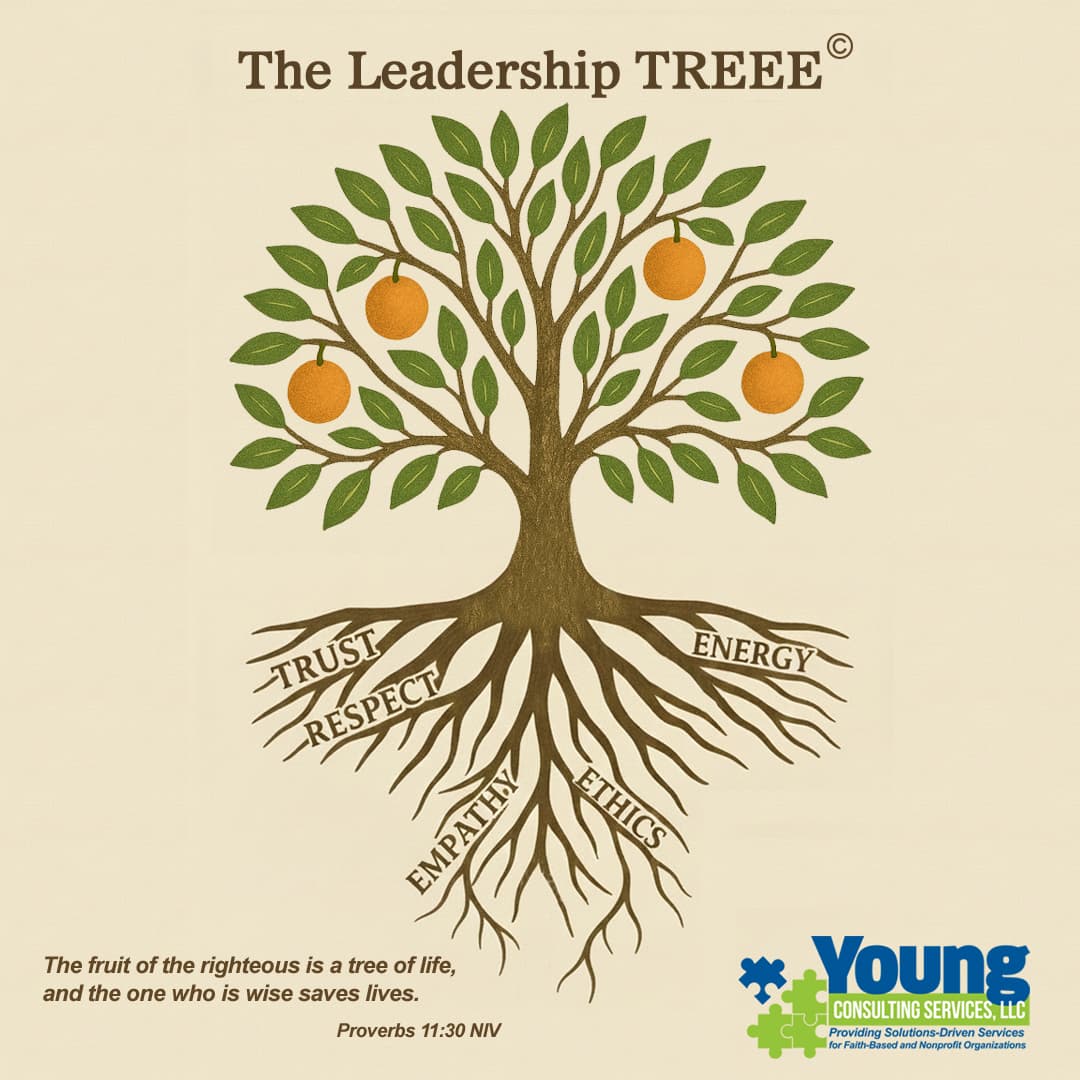 The more opportunities I gain to build my leadership capacity, the more I reflect on the characteristics of an effective and positive leader. Leadership has increasingly become important in my life, and I want to ensure that I reflect the Christian qualities of being a good leader to those I support. When thinking about those qualities, this concept of a tree came to mind.
The roots of a tree are essential to the tree’s proper growth and maturity. In researching the importance of the roots, I’ve learned that in particular, the fruit tree is only as healthy as its roots. This means that what is grown from the tree is based upon how healthy it is in the ground, where it’s first developed.
I consider leadership to be much like the root of a tree. How those roots are formed determine whether the tree will withstand whatever environment it’s placed in, whether it will hold the weight of what comes, whether it will transport the right nutrients to life-giving fruit, and whether it stores the right amount of energy. The roots communicate to both its foundation (the earth and its ecosystem), and transfers that energy to the branches, the leaves, the flowers and the fruit. The roots anchor the tree.
On the other hand, when the roots are not strong nor firmly connected to the earth, the fruit that grows is small, it can’t withstand the weight, and sometimes there’s no fruit at all. Those weak roots can’t anchor the tree firmly in the ground, therefore causing the tree to bend when there’s pressure. When the roots are not healthy, it can’t transport the necessary nutrients, water or energy that it takes for the fruit to sustain.
This study made me reflect on the necessary qualities it takes for leaders to bear healthy fruit, which I call TREEE. These qualities create the root system that build sustainable and healthy leadership.
• Trust: A leader cannot lead people who do not trust them. Trust builds psychological safety, credibility, encourages honesty and open communication, and reduces fear, confusion and internal conflict. When leaders can be trusted, it allows their team to be innovative in a non-punitive manner, and increases commitment. A leader can have the best strategies, but without trust the strategies fail due to lack of credibility. There are so many different ways that leaders can build trust among their team, but I’ll mention a few here: keeping their word, being consistent, being vulnerable and honest, owning their mistakes, and communicating clearly and regularly.
• Respect: Respect is how leaders show that their team’s contributions matter. It promotes loyalty and teamwork, helps people feel valued, and reduces conflict. Respect encourages mutual accountability. Leaders can build respect amongst their team by encouraging active listening, where you listen to understand, not to respond. Leaders should show appreciation and give credit where it’s due. And ultimately, treat everyone with dignity and be fair. Fairness creates trust, and trust creates respect. Leaders should be a positive role model to provide an example of the behavior of their team.
• Empathy: Empathy allows leaders to connect with their team beyond tasks – understand their emotions, perspectives, experiences, and talents. Considering empathy helps leaders to make better decisions that considers their team. Empathy bring a sense of connection that’s not about being in charge. Building empathy means being approachable and available, allowing individuals to provide input in making collective decisions where they can have buy-in. Empathy doesn’t negate feelings but rather validates it. Empathy supports work-life balance and allows for flexibility when possible. When people feel cared for as humans, and not just as the team, they perform better.
• Ethics: Ethics is the moral compass of leadership. Ethics ensure that leaders lead with integrity and trust, and sets the culture for the rest of the team. It ensures decisions that are made are fair, transparent and based upon the organization’s principles. Ethical leaders inspire confidence from their team because they can be trusted to “do the right thing,” even when no one is watching. Leaders should have clear standards to prevent unethical “gray areas,” especially when the environment may cause the tree to bend from pressure or the weather. Leaders should hold themselves accountable just as much as their team.
• Energy: Leaders should bring the appropriate driven momentum to their team. It’s the fuel and nutrients that are needed for the tree to bear good fruit. A leader’s energy influences the entire culture. The energy should motivate and inspire, create enthusiasm and commitment, and pushes the team through challenges. That energy helps to reduce burnout and models positive engagement and appropriate self-care for the team. Low-energy leaders drain teams; high-energy leaders elevate them. While oftentimes it’s hard, leaders need to reframe challenges to present as opportunities, and speak with encouragement.
• Respect: Respect is how leaders show that their team’s contributions matter. It promotes loyalty and teamwork, helps people feel valued, and reduces conflict. Respect encourages mutual accountability. Leaders can build respect amongst their team by encouraging active listening, where you listen to understand, not to respond. Leaders should show appreciation and give credit where it’s due. And ultimately, treat everyone with dignity and be fair. Fairness creates trust, and trust creates respect. Leaders should be a positive role model to provide an example of the behavior of their team.
• Empathy: Empathy allows leaders to connect with their team beyond tasks – understand their emotions, perspectives, experiences, and talents. Considering empathy helps leaders to make better decisions that considers their team. Empathy bring a sense of connection that’s not about being in charge. Building empathy means being approachable and available, allowing individuals to provide input in making collective decisions where they can have buy-in. Empathy doesn’t negate feelings but rather validates it. Empathy supports work-life balance and allows for flexibility when possible. When people feel cared for as humans, and not just as the team, they perform better.
• Ethics: Ethics is the moral compass of leadership. Ethics ensure that leaders lead with integrity and trust, and sets the culture for the rest of the team. It ensures decisions that are made are fair, transparent and based upon the organization’s principles. Ethical leaders inspire confidence from their team because they can be trusted to “do the right thing,” even when no one is watching. Leaders should have clear standards to prevent unethical “gray areas,” especially when the environment may cause the tree to bend from pressure or the weather. Leaders should hold themselves accountable just as much as their team.
• Energy: Leaders should bring the appropriate driven momentum to their team. It’s the fuel and nutrients that are needed for the tree to bear good fruit. A leader’s energy influences the entire culture. The energy should motivate and inspire, create enthusiasm and commitment, and pushes the team through challenges. That energy helps to reduce burnout and models positive engagement and appropriate self-care for the team. Low-energy leaders drain teams; high-energy leaders elevate them. While oftentimes it’s hard, leaders need to reframe challenges to present as opportunities, and speak with encouragement.
In all of this, that’s why its important for leaders to find their own level of balance and self-care, so their own personal pressures don’t negatively impact the growth and nutrients of the tree. The weight of leadership can be heavy if you allow it. But if the roots (leaders) stay firm to the ground (God), then they have the ability to withstand whatever environment comes to allow for their fruit (the team) to grow and withstand the turbulent times that will come.